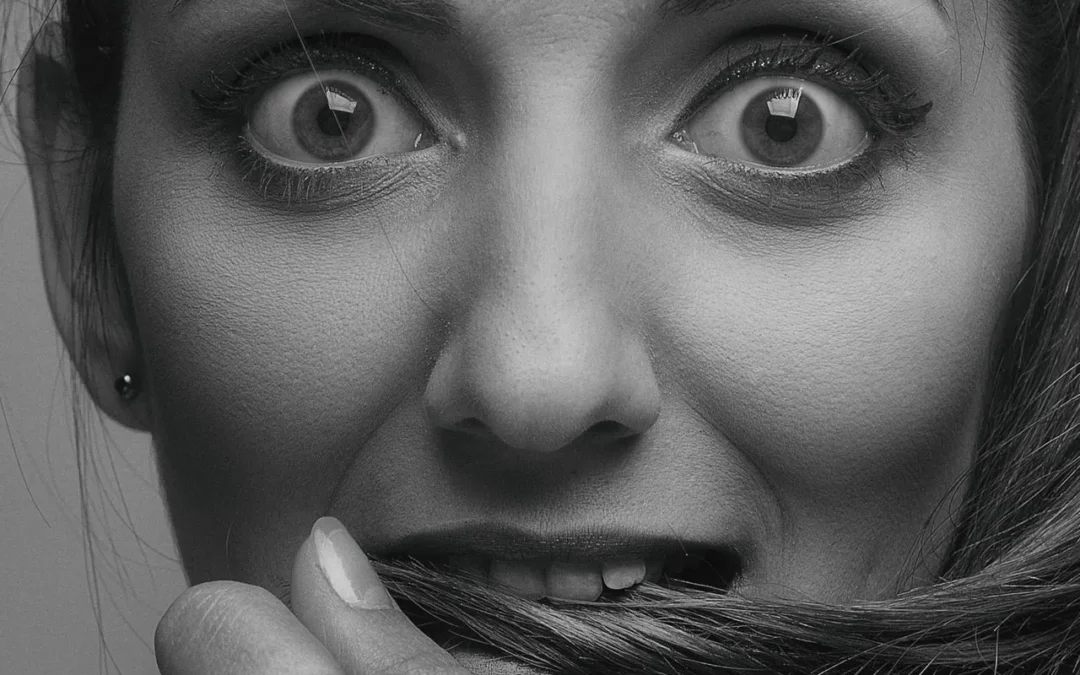
Cognitive Behavioral Therapy (CBT) helps reduce anxiety by identifying the thoughts that cause anxiety, testing whether our thoughts are accurate, and changing these thoughts so that you feel calmer. It is one of the most researched forms of psychotherapy, and for anxiety disorders, decades of clinical studies show it works as well for many people.
Cognitive Behavioral Therapy (CBT) helps reduce anxiety by identifying and challenging the anxious thoughts that cause distress, testing their accuracy, and then changing these thoughts to foster calmer emotional states. This structured form of talk therapy operates on the principle that thoughts, feelings, and behaviors are interconnected, allowing individuals to influence their emotions and actions by altering their thought patterns. Decades of clinical studies consistently demonstrate that CBT is an effective treatment for many people with anxiety disorders. Through techniques like cognitive restructuring and exposure therapy, Sieber Psychotherapy helps clients break the cycle of worry and avoidance, enabling them to cope with difficult situations more effectively.
What Is CBT, Exactly?
Cognitive Behavioral Therapy is a structured form of talk therapy built on a simple idea: thoughts, feelings, and behaviors are connected. Changing our thoughts (which is possible!) influences how we feel emotionally, and gives us the power to behave differently. Most CBT is short term, with clear goals and homework between sessions — interactive and goal oriented.
How Anxiety Works — and Where CBT Steps In
Anxiety usually follows a pattern: a trigger or event leads to a fearful thought (“Something bad is going to happen”), we feel scared, and we often have physical symptoms (racing heart, difficulty breathing). This leads to avoidance (skipping a meeting, for instance). Avoidance brings short-term relief, but the anxiety continues. By running from our fears, we teach the brain that the situation really was dangerous — so we stay stuck in worry and fear.
On the other hand, Cognitive Behavioral Thearpy helps reduce anxiety by breaking this cycle. We challenge our fearful thoughts, and increase our ability to engage in activities. We function in a healthy way, and learn that we have the ability to cope with difficult situations.
Core CBT Techniques for Anxiety
Cognitive restructuring. Clients learn to identify automatic anxious thoughts (“I’ll embarrass myself,” “This plane will crash”) and evaluate them like a detective would: What’s the actual evidence? What’s a more balanced way to see this? Over time, we learn to replace these irrational thoughts with thinking that is more balanced and realistic.
Exposure therapy. A very effective CBT tool for reducing anxiety, exposure is based on changing our behaviors. Exposure involves gradually and safely facing feared situations — starting small and taking it slowly — so the nervous system learns the threat isn’t as large as it feels. This is especially well-studied for phobias, panic disorder, and social anxiety.
Behavioral experiments. Rather than just discussing whether a fear is realistic, you might test it directly (“I’ll speak up in the meeting and see what actually happens”) and compare the prediction to the outcome. Human beings frequently predict that things will turn out horribly, and that is usually not the case.
Relaxation and physiological skills. Techniques like deep breathing and progressive muscle relaxation help manage the body’s stress response. Our physical body calms down, decreases the release of stress chemicals in the body, and helps us think more clearly.
Mindfulness-based strategies. Many modern CBT approaches add mindfulness skills to help people relate differently to anxious thoughts rather than getting pulled into them. Anxiety is almost always focused upon worry about the future, and mindfulness helps us stay in the present. It reminds us that we are ok, now.
What types of Anxiety can CBT help?
Anxiety disorders — generalized anxiety, panic disorder, social anxiety, phobias, and health anxiety — respond consistently well to CBT because these conditions are characterized by predictable patterns of thought and avoidance.
What to Expect in Therapy
The typical practice of CBT starts with assessment and education, moves into building a personalized examination of feared situations or thoughts, and progresses through structured practice both in and between sessions. Homework — thought records, exposure practice, relaxation exercises — is central, since the skills only take hold with repetition outside the therapy room.
Frequently Asked Questions
Is CBT effective for all types of anxiety? Yes. CBT helps with generalized anxiety disorder, panic disorder, social anxiety disorder, specific phobias, adjustment issues, and health anxiety.
How long does CBT for anxiety take to work? Many people notice some noticable improvement within 6 to 8 sessions, although length of treatment can vary based upon many individual differences.
Is CBT better than medication for anxiety? Both can be effective, and they’re often combined. CBT can have lasting benefits because it teaches skills rather than only managing symptoms. Hans J Sieber, MC, LPC is not a medical doctor and does not prescribe medications. Speaking with a psychiatrist or your Primary Care Provider is recommended if you have questions about possible medication.
Can I do CBT techniques on my own? Self-help CBT resources can be useful for mild anxiety. However, while you may be motivated, working with a CBT trained therapist helps keep you accountable – you have someone who is going to ask you about your homework and follow up with you from week to week.
If anxiety has been interfering with your decisions, relationships, or daily life, CBT can help! Contact Hans J Sieber, MC, LPC today, or Call to set up an appointment to start CBT.